How Melitta’s Digital Shift Won Hearts and Minds
Accelerating digital learning from PowerPoints
to nearly 100 eLearning courses

Melitta Group is a family-owned, global company founded in 1908 after inventing the coffee filter. With nearly 6,000 employees
in 18 countries, it operates across coffee and tea, household products, and freshness solutions.
In 2022, it generated €2.15 billion in sales, holds over 1,000 patents, and actively advances sustainability through
certified coffee, recycled materials, and CO₂ reduction.
Driving cultural change towards digital learning
Melitta’s digital transformation began with the implementation of their first human capital management system. Historically, training had relied heavily on PowerPoint, virtual calls, and on-site meetings. Thorsten Manz, Manager - People & Organisational Development, recognised the need to expand and promote an eLearning culture within the organisation to improve efficiency and reduce costs.
Operating as a global but highly decentralised business, Melitta needed to balance respect for the independence of its dispersed business units with the ability to provide mandatory training and share essential knowledge across teams and geographies.
However, the organisation faced a key limitation: a lack of resources to produce the required volume of eLearning content. Thorsten’s priority was a tool that was both intuitive and powerful; something that would enable rapid onboarding and quick content creation without compromising quality. As he explained, “I did not want to have to spend two weeks learning a tool before I could even write a headline.”
Additionally, Melitta targeted a cultural shift: embedding eLearning as a valuable part of the learning experience and ensuring rapid, effective knowledge transfer. Any solution also needed to be capable of supporting a global workforce across borders and time zones.

Transforming traditional training into digital experiences
Melitta selected imc Express as the ideal tool to achieve its eLearning ambitions. The platform provided the ease of use, speed, and professional results the organisation required.
The team’s strategy began with producing new training, that did not need to be delivered in person, as high-quality eLearning modules, supported by subject matter experts. Next, they reviewed existing training programmes to identify elements that would benefit from being redesigned as eLearning – both for efficiency and to enhance the learner experience.
With imc Express, Melitta could roll out a scalable, global eLearning approach. Training materials could be produced quickly, shared easily with subsidiaries and partners, and made accessible across time zones. Importantly, the tool encouraged a shift in culture by making knowledge sharing straightforward and engaging for all employees.

Building a sustainable and successful eLearning culture for the future
The results of Melitta’s adoption of imc Express were immediate and significant. Within the first year, the team produced almost 100 pieces of eLearning content, a volume that would not have been possible with traditional methods. Thorsten became a key advocate and “cheerleader” for the new approach, inspiring colleagues across global divisions and the HR community to adopt the tool themselves.
Positive feedback quickly followed. For example, a recent Customs Management eLearning programme created in imc Express received 12 five-star reviews – a first for that training area. Learners described it as a far more positive and engaging experience than previous formats.
Colleagues also highlighted efficiency and quality improvements. A team in England reported that combining multiple training documents and formats into a single experience not only saved time but also delivered a higher quality experience, accessible to every employee.
The benefits extend beyond just learner engagement. Cost savings were achieved by replacing in-person training with digital formats, and the roll-out of imc Express continues to expand globally.
Looking ahead, Thorsten’s vision is to extend the approach beyond compliance and mandatory training, incorporating leadership and other complex topics, while making use of the integrated AI features to further scale training at speed.
With imc Express, Melitta is challenging traditional learning methods and building a culture of innovative, accessible, and engaging digital learning – ultimately supporting the growth and development of both employees and the wider organisation.
De-escalation training with a game-like experience
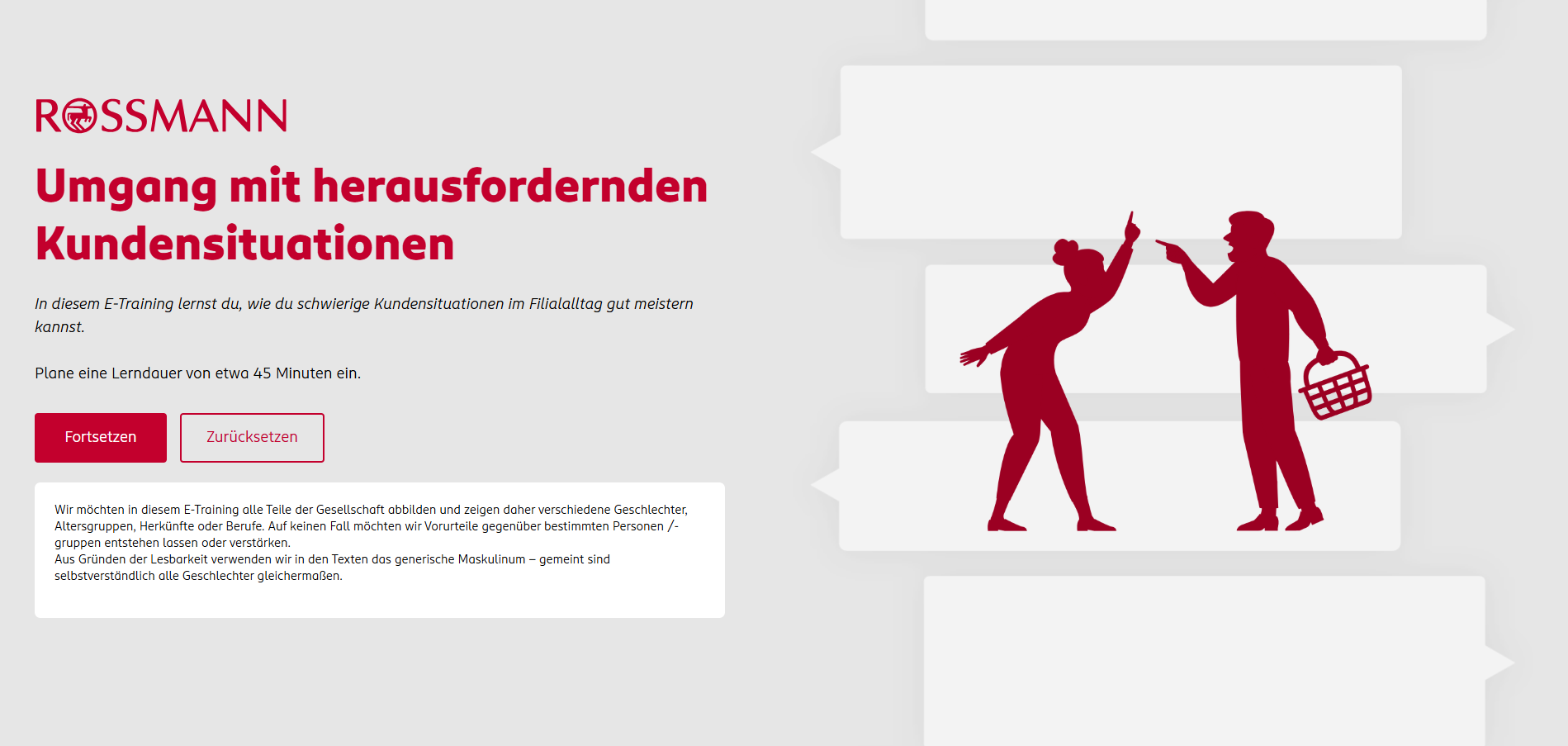
Interactive de-escalation training at ROSSMANN
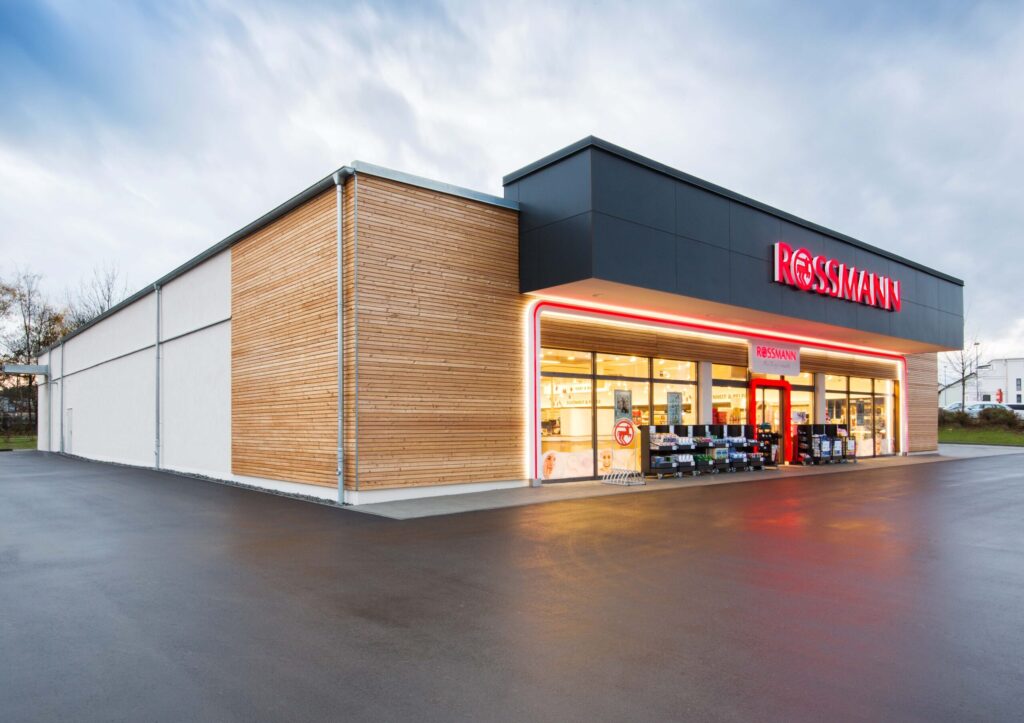
As the pioneer of the drug store format in Germany, Dirk Roßmann opened his first “market for drugstore goods” in Hannover in 1972. Today, ROSSMANN (headquartered in Burgwedel near Hannover) is one of Europe’s largest drugstore chains, with 65,500 employees across 4,966 stores. In Germany alone, more than 2,311 ROSSMANN branches serve over 1.84 million customers every day.
Handling customer conflict in day-to-day retail life
In retail, conflicts between customers and staff can arise all too easily – for example, when customers test products without permission, disturb others with their behaviour, or attempt fraud. Working at ROSSMANN saw employees regularly encounter these situations.
“These instances have only increased in recent years,” explains Christina Hennings, elearning consultant at ROSSMANN. “Some customers have a short fuse, and conflicts can escalate quickly – sometimes involving insults or even physical aggression. Naturally, we want to protect our staff from this.”

There is also the company’s image to consider: through social media, dissatisfied customers have access to their own wider platform – even if their original complaints are unjustified or the conflict was triggered by their own behaviour. De-escalation training is therefore essential to avoid conflicts in the first place or at least prevent them from escalating.
Up until now, ROSSMANN relied on classic, linear training courses – mostly produced in-house and partly purchased. While these provided a good foundation, interactive formats promised stronger learning outcomes.
Store managers also had access to two-day classroom training, but their teams only benefited indirectly through what these individuals shared afterwards. This led to a growing desire to try something new: an interactive training format that all frontline employees could access.
Gamification as a key success factor
ROSSMANN has successfully used the imc Learning Suite as its learning management system for several years. For this project, the company partnered with imc Studios to design and implement the new de-escalation training. This ensured seamless integration with the existing learning platform while drawing on Scheer IMC’s extensive eLearning expertise.
“It was important to us that the training was interactive and incorporated gamification elements to motivate employees and achieve better learning outcomes,” says Christina Hennings. “We also chose to use voice-over narration to make the content more accessible and to help reduce potential language barriers.”

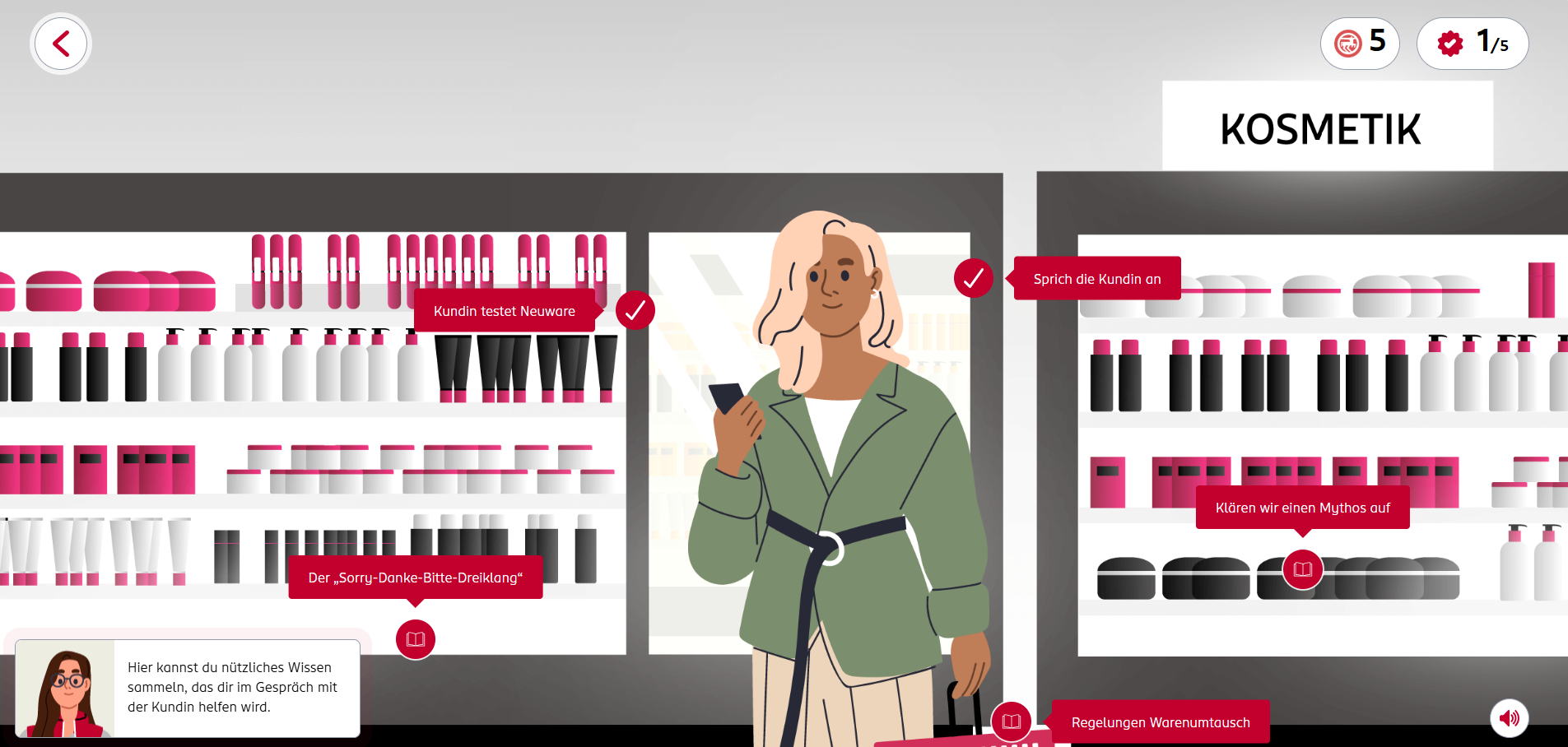
Working closely together, the teams developed a training course that guides employees through a variety of realistic scenarios that they frequently encounter in-store. Learners choose between different responses, leading to a variety of outcomes – from escalation through to a successful resolution. Additional learning nuggets provide background knowledge, while narrated dialogues bring the scenarios vividly to life.
ROSSMANN provided the subject-matter expertise for the training “Dealing with challenging customer situations”, while Scheer IMC handled the implementation. Extensive decision trees were used to map out the different choices and their consequences.
The project also involved ROSSMANN’s sales, audit, and customer service departments (with their wealth of de-escalation experience), alongside the design team to ensure corporate branding was applied consistently.
A training format that resonates – and can grow
The resulting final training solution fully met ROSSMANN’s expectations: an engaging, interactive format that employees enjoy and that helps them manage their daily challenges more effectively. Feedback from stores has also been overwhelmingly positive. Staff particularly appreciate being able to test out different options and explore alternative outcomes.
“Our goal is for employees to repeat the training and try out new reactions each time,” says Christina Hennings. “This way, the learning really sticks.”
All 33,000 frontline employees are completing the eLearning programme, strengthening their de-escalation skills. Looking ahead, Christina Hennings sees the potential to expand the training by adding further scenarios over time.
The training was awarded the eLearning Award 2026 in the “Web Based Training” category, with a focus on conflict management. Particular praise was given to the combination of clearly defined learning objectives, technical robustness, and didactic innovation.
W&W: A single system for everything
A shared, future-ready learning system
for the W&W Group

The W&W Group is a financial services provider born out of the merger of two long-standing companies: Wüstenrot and Württembergische. At the heart of its business lies one key theme: provision for the future.
Today, the Group incorporates two business units and 17 companies, employing around 13,000 people across both internal and external roles.
Complexity instead of unity:
A fragmented learning landscape
The W&W Group had been using various different learning management systems (LMS), depending on the individual company and use case. This meant that sharing content across the group was virtually impossible, and many systems lacked modern features such as learning paths or multimedia formats.
This fragmented landscape created challenges not only for learning managers but also for the learners themselves. For example, self-directed learning content could be found in one system, while instructor-led courses were located in another. This separation made it difficult for learners to find relevant content.
One critical issue in the insurance sector is the tracking of so-called IDD hours – mandatory continuing education for insurance brokers. As Mike Bochmann, Head of Specialist Training at Wüstenrot, explains: “The hours had to be exported regularly and made available on a separate platform. For affected employees, it was impossible to check their current IDD status quickly and easily. What we wanted was a system where this status is always up to date.”
Some companies within the group also needed to provide learning to external audiences, such as banking and sales partners. To offer them a different learning experience, yet another system was used – making administration even more complex.
A future-ready LMS – one platform for everything
It soon became clear: the W&W Group needed a unified and future-ready LMS. Finding the right solution was a large-scale joint effort. As Sabine Volk, HR Development Expert at Wüstenrot & Württembergische AG (W&W AG), recounts: “From the start, L&D managers from the various companies, together with departments such as IT and Controlling, were involved. We began by collecting our diverse requirements into a comprehensive catalogue and approached several providers with it.”
Demo access allowed the project team to explore and test each of the different systems. Three providers made the shortlist, and the final choice was the imc Learning Suite, which best met the group’s complex requirements. The team also felt well-supported and guided transparently throughout the entire selection process. Crucially, the system could easily handle the high number of learners: over 10,000 employees plus around 4,000 external users.
Particularly convincing were the simplified user experience and shared task management for administrators, which enables made delegating to and covering for colleagues seamless. Tamara Leitner, Digital Learning Consultant at Württembergische Versicherung AG, highlights another key point: “By connecting with Microsoft Teams, we can easily demonstrate who attended each training. This is a big help with IDD, where we must document participation. Until now, reporting was a manual process – so we’re really looking forward to the automated option.”
Jessica Rütz, Digital Learning Specialist at the Württembergische Vertriebspartner GmbH (WVVP) Academy, adds: “In my area, it’s especially valuable that we can segment learners into different target groups and make tailored adjustments. Not everyone sees all content anymore – each overview is much more relevant.”

Header and banner image: ® W&W/Tom Ziora

First steps and what comes next
The project began with a kick-off event and two full-day training sessions for the core team. This was followed by close support from dedicated Scheer IMC contacts and a ticketing system for handling specific questions. The current test phase will soon be followed by data migration from legacy systems, and then a roll-out across the group.
Tamara Leitner sums up the positive first reactions: “The cockpit for managers and learners has already gone down well with test users. The look and feel of the interface, plus the intuitive usability, are very convincing.”
By choosing the imc Learning Suite, the W&W Group has taken an important step towards more efficient and user-friendly learning. The company is now well on its way to creating a unified, future-oriented learning ecosystem for the entire group.
A4DD: Training reimagined
Reimagined membership training in record time

The Association for Delivery Drivers is a not-for-profit organization that makes it easy and affordable for America's delivery drivers to get what they need to operate safely and successfully and comply with contract and regulatory requirements. A4DD offers training, insurance, and discounts on products and services for delivery drivers.
Re-creating critical training without the support of external partners
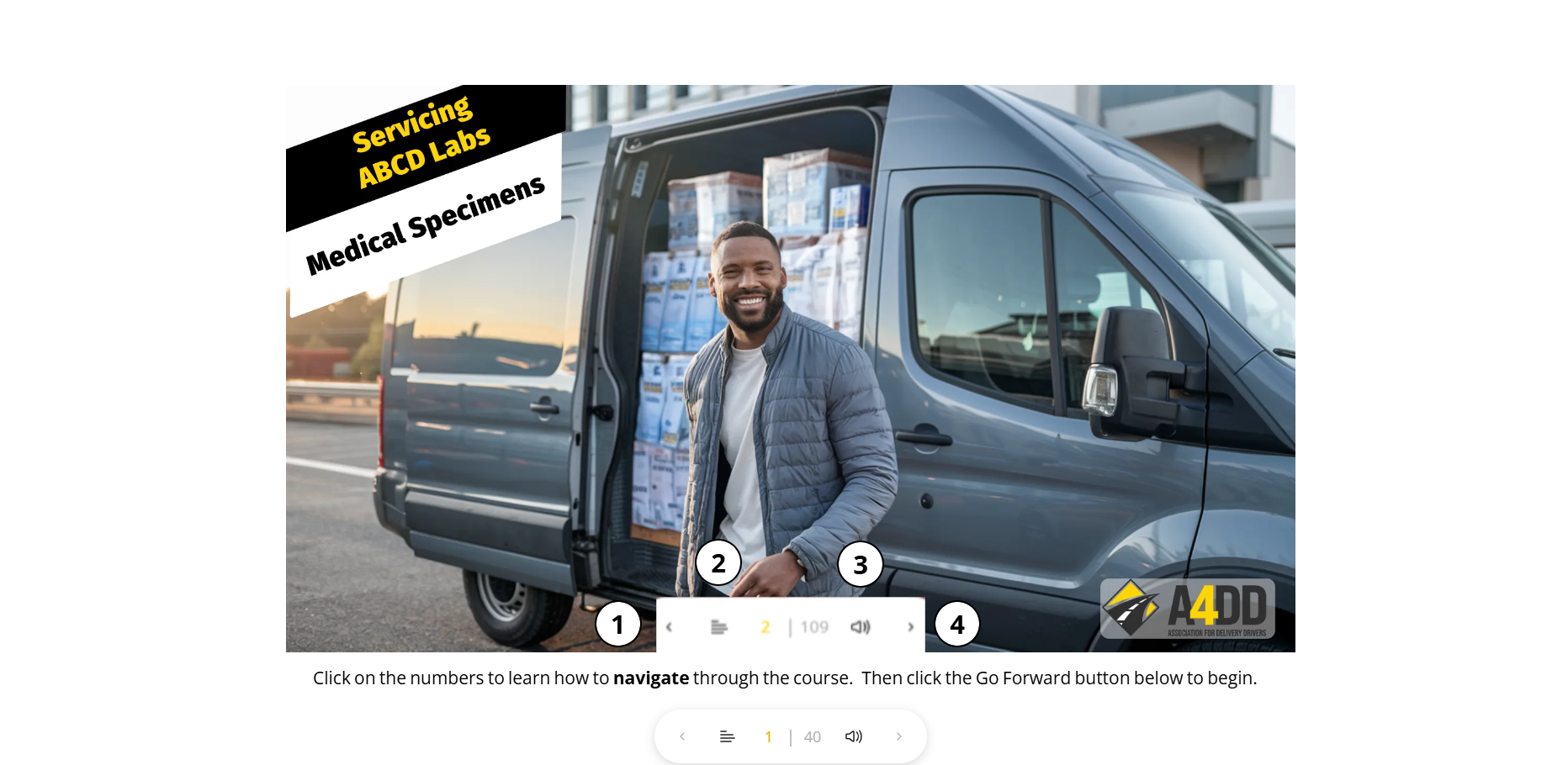
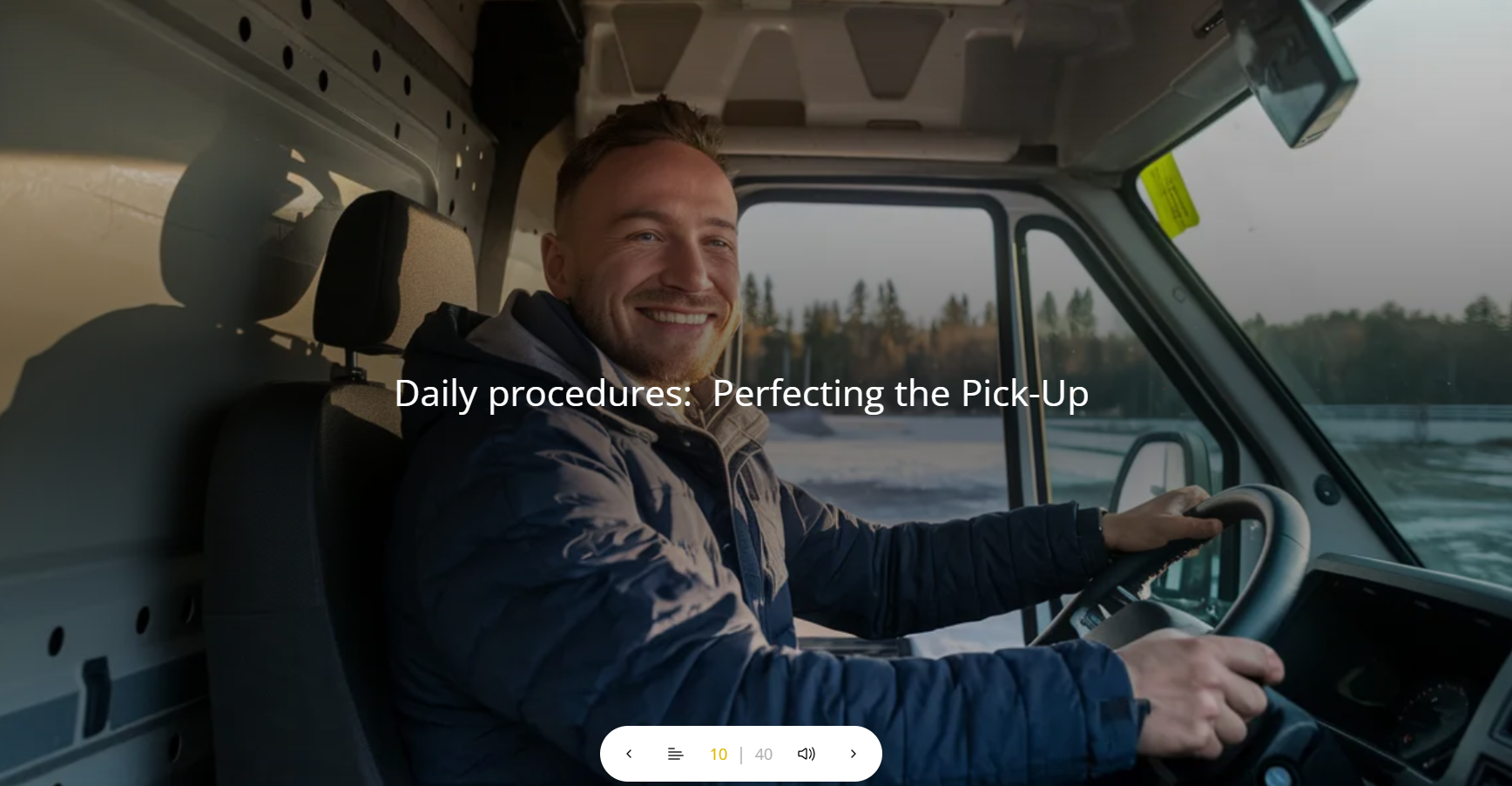
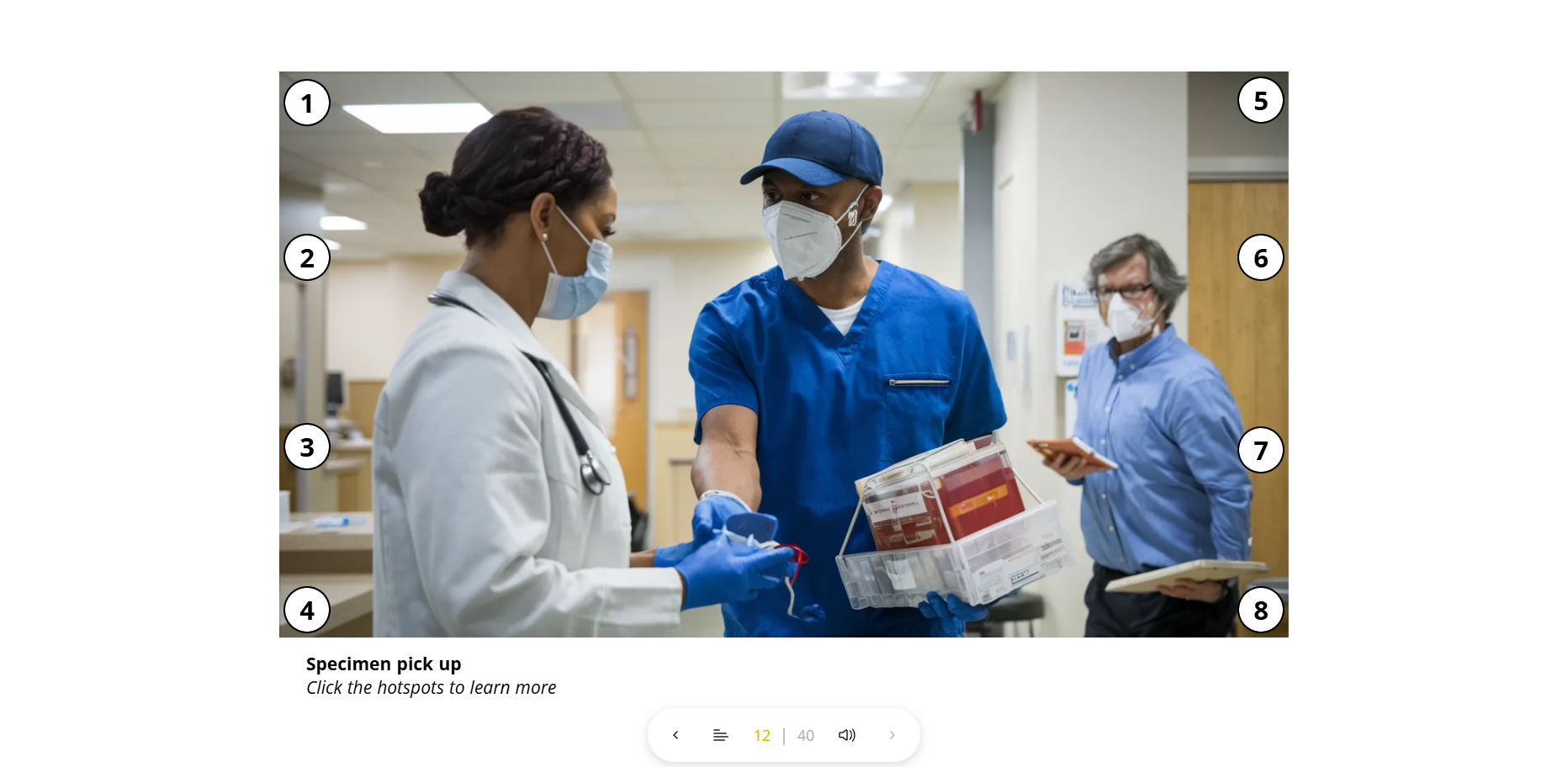
A4DD faced a critical and immediate challenge. Their Bloodborne Pathogens (BBP) course for safe delivery of blood and lab specimens needed to be updated. The training is required for many medical delivery workers, but their previous content partner and source files were no longer available.
A4DD’s mission is to provide affordable, accessible support to its members and the need to provide continuity for this critical training meant it needed to find a cost effective and rapid solution.
An intuitive tool for onboarding and training delivery within weeks
Enter imc Express. This intuitive content creation tool enabled A4DD’s team to independently recreate an hour-long compliance course in just a few weeks, without the original source files or costly external support.
Additional benefits for the team are the ability to independently customize and update the content at any time, to keep pace with evolving regulatory requirements and to localize the content in multiple languages. Peter Schlactus, Co-Founder and Executive Director of A4DD explains, “In addition to supporting and building on our existing training offerings, having this platform has enabled us to quickly and cost effectively develop customized training modules.”
Transformational content delivery and new opportunities
The partnership with imc Express delivered transformational benefits for A4DD:
- Business Continuity: Training remained uninterrupted, preserving compliance and support for thousands of members.
- Operational Control: A4DD now has full control over its training content, eliminating future dependency risks.
- Cost and Time Savings: They avoided costly and time-consuming external content redevelopment.
- New Opportunities: The organization is now more easily able to create customizable training solutions.
- High-Quality Outcomes: Early customer feedback highlighted that the training exceeded expectations for the learners.
A4DD now has the capability with imc Express to experiment and grow its in-house training content development and offering, and to explore new opportunities with its industry partners.
UOB: Compliance training reimagined
A new kind of regulatory training
United Overseas Bank (UOB) is a leading bank in Asia, headquartered in Singapore, with a global network of over 500 offices across 19 countries and territories. Since its establishment in 1935, UOB has grown through strategic acquisitions and organic expansion, earning top credit ratings from Moody’s, S&P, and Fitch. The bank offers a comprehensive range of financial services, including retail, wholesale, and global markets, and is committed to fostering sustainable growth and innovation throughout the ASEAN region.
Building trust through learning
For United Overseas Bank (UOB), compliance isn’t just a function—it’s foundational to building trust with customers, regulators, and colleagues alike. But for a global workforce of 30,000 employees across 17 countries, the question wasn’t just how to deliver policy and regulatory knowledge—but how to do so in a way that would engage and empower learners.
The vision was clear: create a training experience that could effectively convey complex content without overwhelming the learner. UOB also aimed to align the training with its employee value proposition—Care, Growth, and Trust—while ensuring consistency and cultural relevance across all regions.
To view this video, you need to enable marketing cookies. Click the play button to accept them. You can find more information in our cookie banner and in the privacy policy.
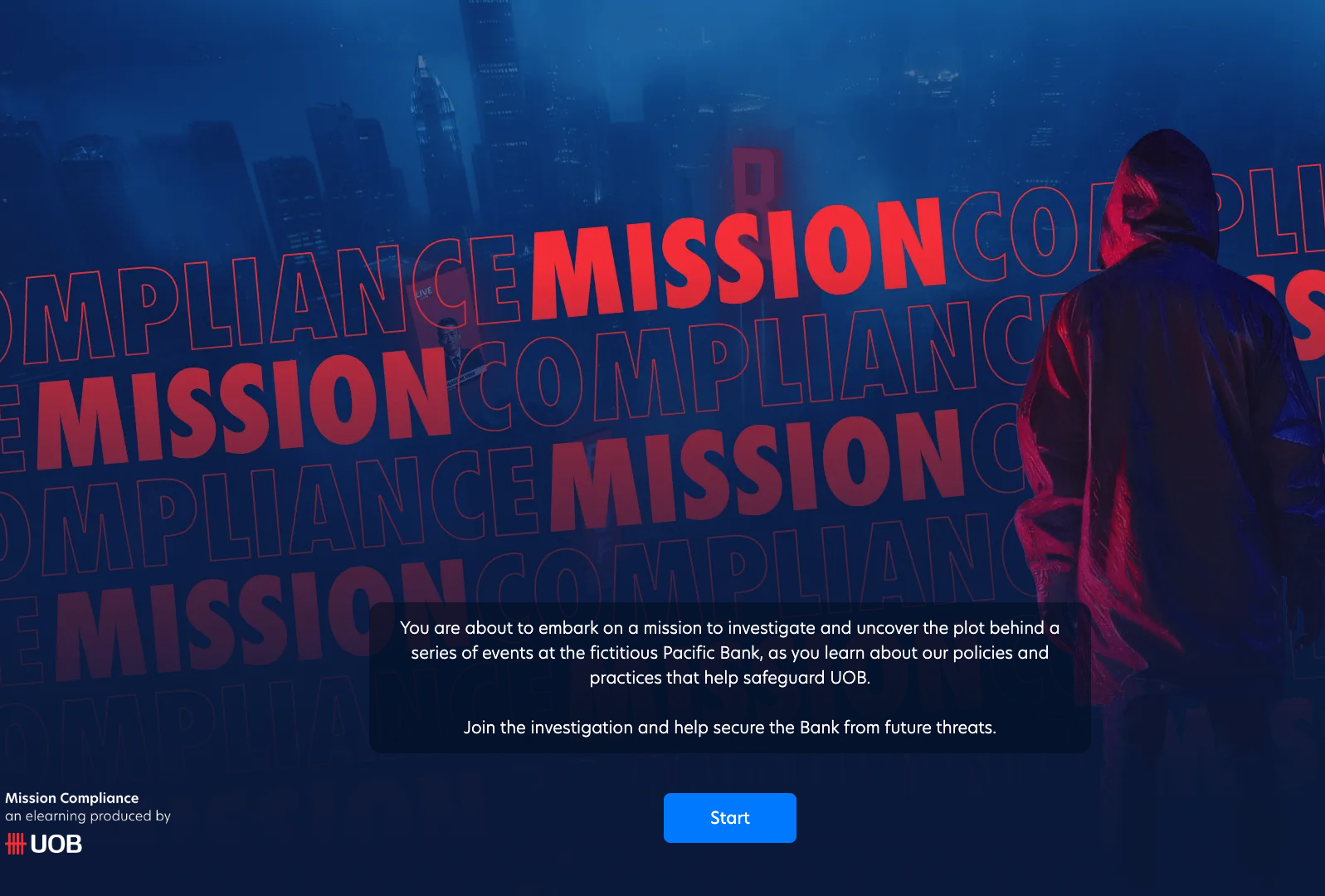
From regulation to storytelling
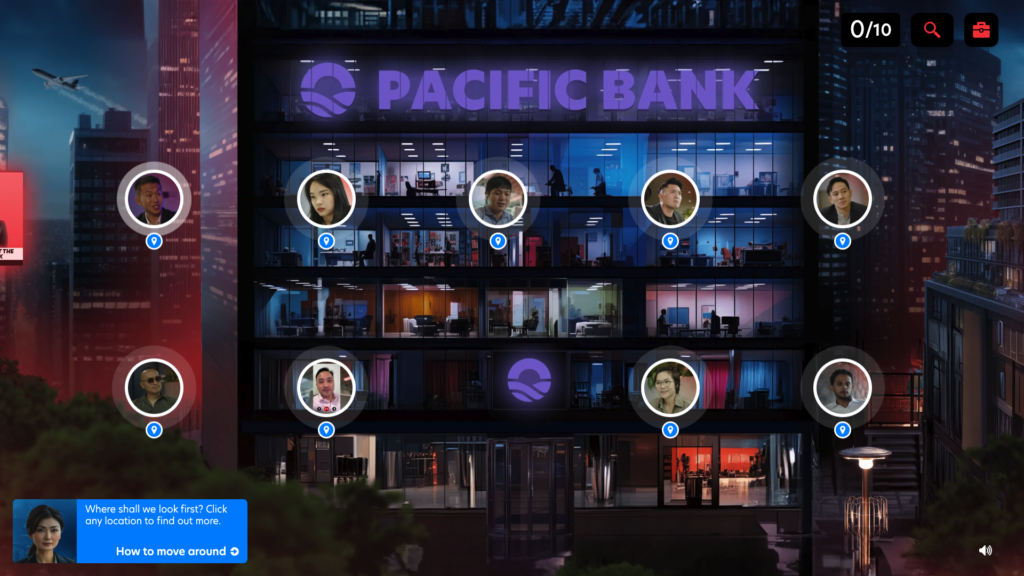
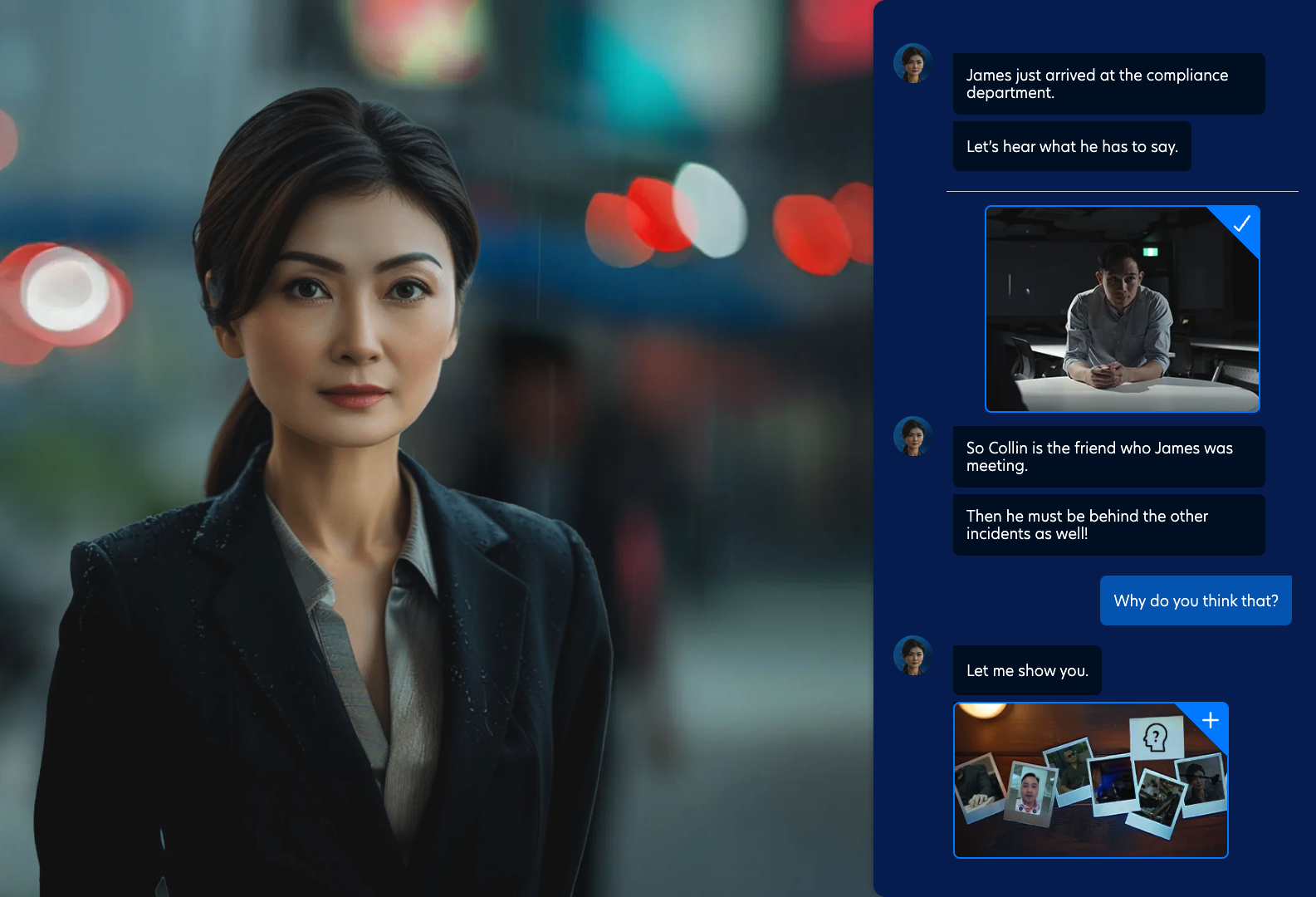
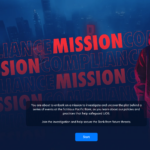
UOB partnered with Scheer IMC to reimagine compliance training from the ground up. Through a close, consultative collaboration involving subject matter experts, learning professionals, and creative leads, the teams developed an interactive, narrative-driven experience that made compliance tangible and relevant — Mission: Compliance
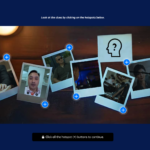
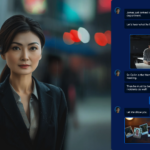
Instead of relying on static materials, learners were placed inside real-world scenarios and guided through branching decision paths. The training combined live-action video, interactive storytelling, and AI-generated visuals to help bring complex topics to life—creating a learning experience that felt intuitive, immersive, and distinctly UOB. Seamless integration into the bank’s learning ecosystem ensured a smooth user experience, while the program’s modular design laid the foundation for future updates and scalability.
Raising the bar for compliance learning
The response from employees has been overwhelmingly positive, reflected in a Net Promoter Score of +46 and an overall experience rating of 4.45 out of 5. More importantly, the training sparked a shift in how compliance is perceived—less as a requirement, and more as a core element of UOB’s culture.
Mission: Compliance was built with longevity in mind. Its adaptable structure supports regular refreshers, regulatory updates, and evolving learning needs, ensuring UOB’s teams remain confident and compliant well into the future. As other departments look to adopt similar approaches, this project stands as a new standard for learning in regulated environments—one rooted in trust, innovation, and collaboration.
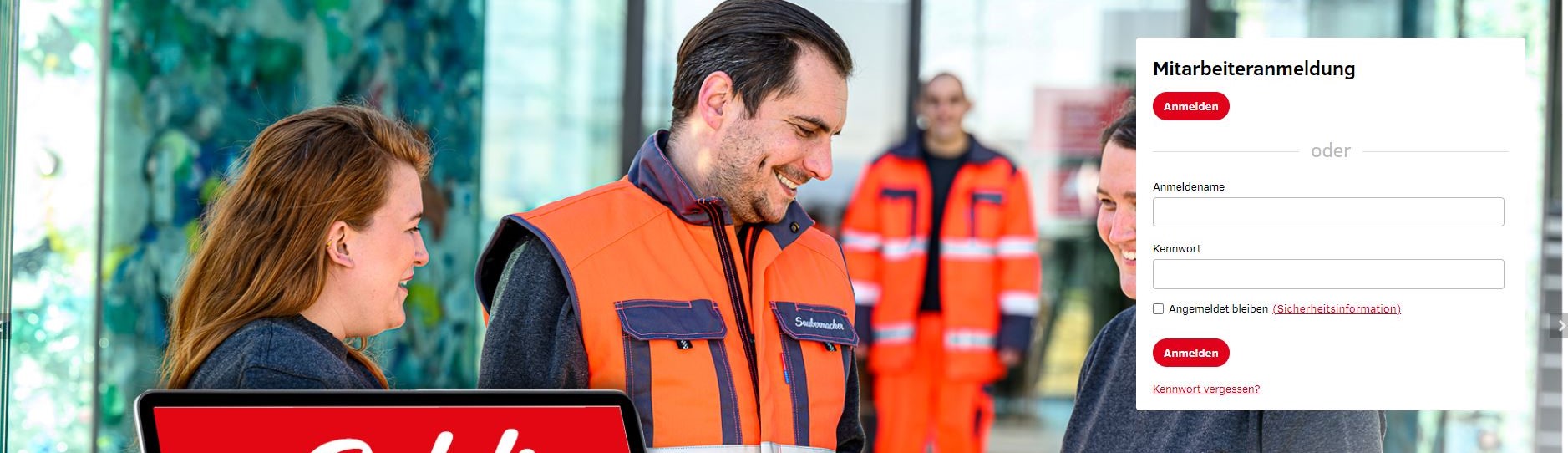
A new learning culture at Saubermacher
Saubermacher: eLearning in waste disposal with LMS and authoring tool
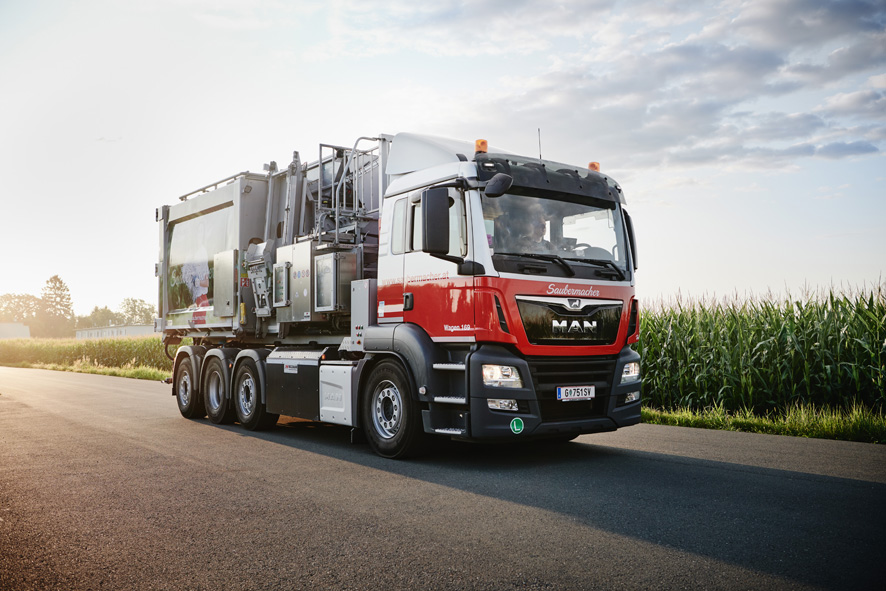
Saubermacher AG, founded in 1979 by Hans and Margret Roth, is a leading waste management and recycling company headquartered in Feldkirchen near Graz. With around 3,600 employees in 8 countries, the company serves around 1,600 municipalities and 42,000 companies.
Saubermacher relies on smart services and innovative technologies and has received several awards for its commitment to sustainability.
Looking for a centralized platform for training and further education
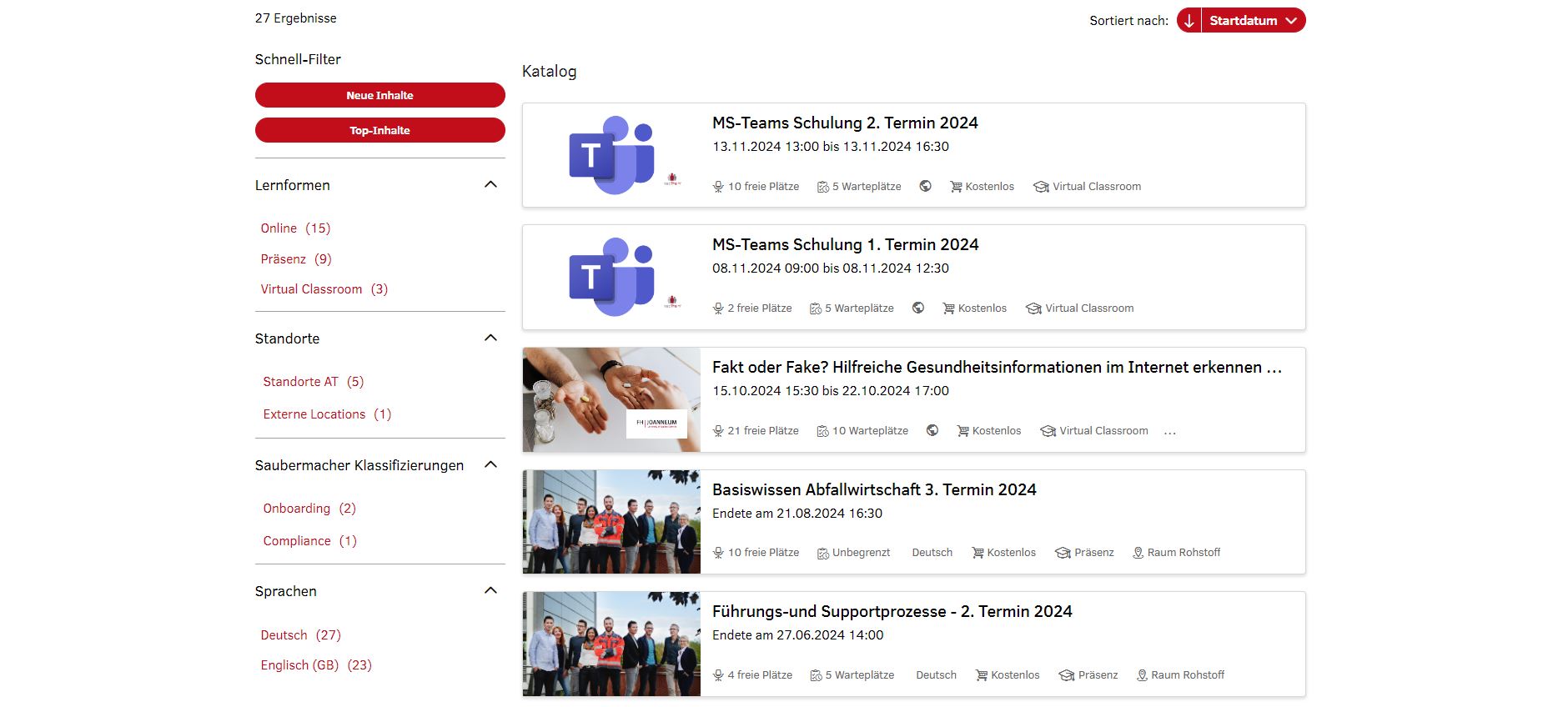
Saubermacher was using various tools in the area of learning. These were to be brought together: "The aim was to offer our employees a central platform on which they can complete training and further education independently," explains Clara Gögele, Group HR Management at Saubermacher.
The various tools for face-to-face and online training, as well as the fact that the app used came from an additional provider, created a lot of administrative work in HR development, for example for sending out reminders, managing lists and reporting. The team wanted more efficiency.
"Audit compliance also plays a major role for us," explains Gögele. "In order to meet the requirements, we need strong monitoring for the legally relevant training courses."

Learning management and content creation from a single source
The project was primarily located in HR development, but the IT department was involved in the project from the outset and was responsible for the technical implementation of the interface. After defining the technical and functional requirements, the team carried out a market analysis and had various solutions from several providers presented to them.
"We looked at various products, including solutions that could only cover online content, for example," reports Gögele. "But the mix was important to us. We wanted to cover all of our training courses without having to rely on different systems again."
This is why the imc Learning Suite was ultimately chosen as the Learning Management System (LMS) in combination with imc Express.

Greater efficiency and inspiring content
The team had a tight schedule for the roll-out of the learning management system. Even though minor hurdles were encountered during the roll-out, the software was successfully launched at the planned time. "The initial feedback was very positive," says Gögele. "The Learning Suite is a modern system that employees find easy to use. We have also noticed that our employees are more motivated because they can discover and register for interesting courses themselves."
Even after just a short time, HR Development sees great potential for time savings through the Learning Suite and imc Express. In addition, user groups with specific attributes allow employees to be supported much more individually than before with little effort. The imc Learning Suite fulfills Saubermacher's complex requirements.
Managers like the fact that they can easily register their team members for important courses. They can also keep an eye on what their employees are interested in.
Saubermacher has benefited from imc Express in onboarding in particular. The various departments within the company are currently developing digital learning content with less effort. The aim is to provide new employees with a quick and interactive overview of the company.
Initially only office-based employees were given access to the tools, the next step is for field-based employees to follow. Clara Gögele sees particular potential for mobile use here: "For us, this was a must-have so that we can fully integrate employees who don't have their own desk or laptop."
In a further step, Saubermacher subsidiaries will also be able to use the imc Learning Suite and imc Express.
Clara Gögele summarizes: "With imc, we can take the learning culture to a new level and promote independence and digital learning. This allows us to set another milestone towards digital transformation within our company.
A game-changing
approach to staffing training
How swissstaffing is transforming staffing industry training with gamification
swissstaffing serves as the centre of excellence for staff leasing companies in Switzerland. As an employers' association, it represents the interests of its members in policy, economic, and societal matters, actively promoting the industry's interests and working to enhance the image of temporary work.
No standardised training solution
The Swiss staffing industry faced a significant challenge due to the absence of standardised training for internal personnel. This gap led to frequent errors and financial losses, adversely affecting the industry's reputation and increasing the risk of stringent regulatory interventions.
There was a pressing need for a comprehensive training solution to ensure consistency, reduce mistakes, and uphold service quality across the sector.
To view this video, you need to enable marketing cookies. Click the play button to accept them. You can find more information in our cookie banner and in the privacy policy.
A gamified digital learning platform
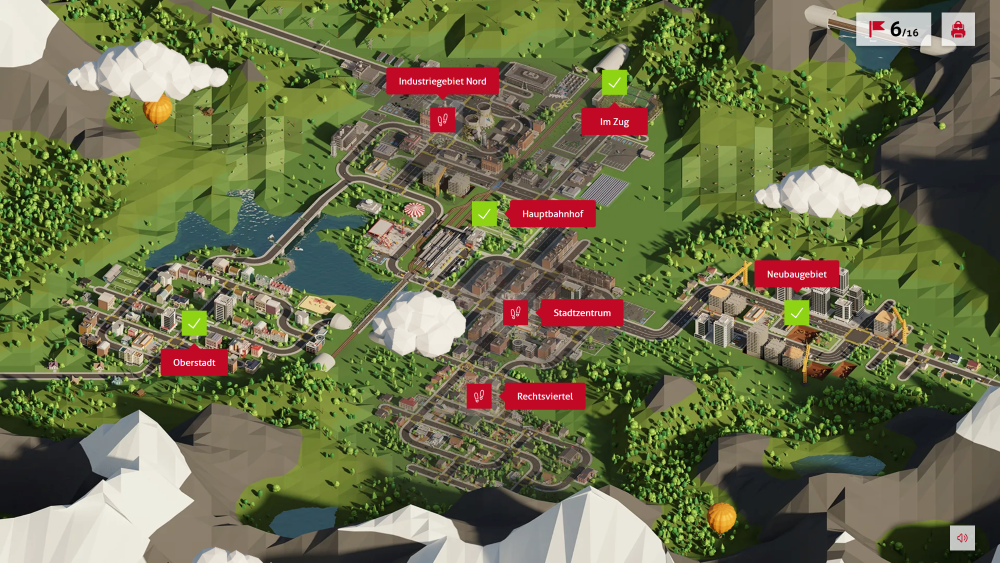
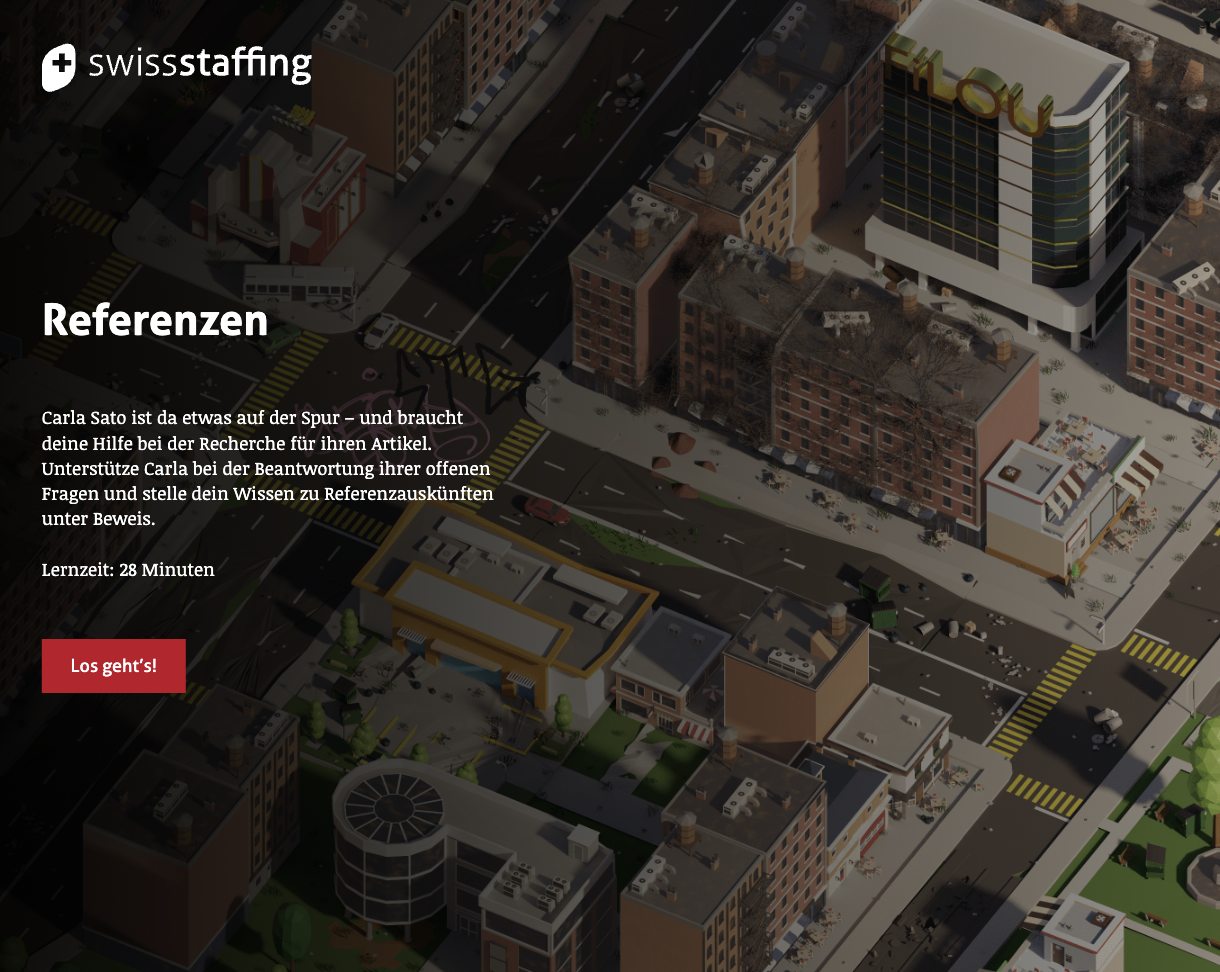
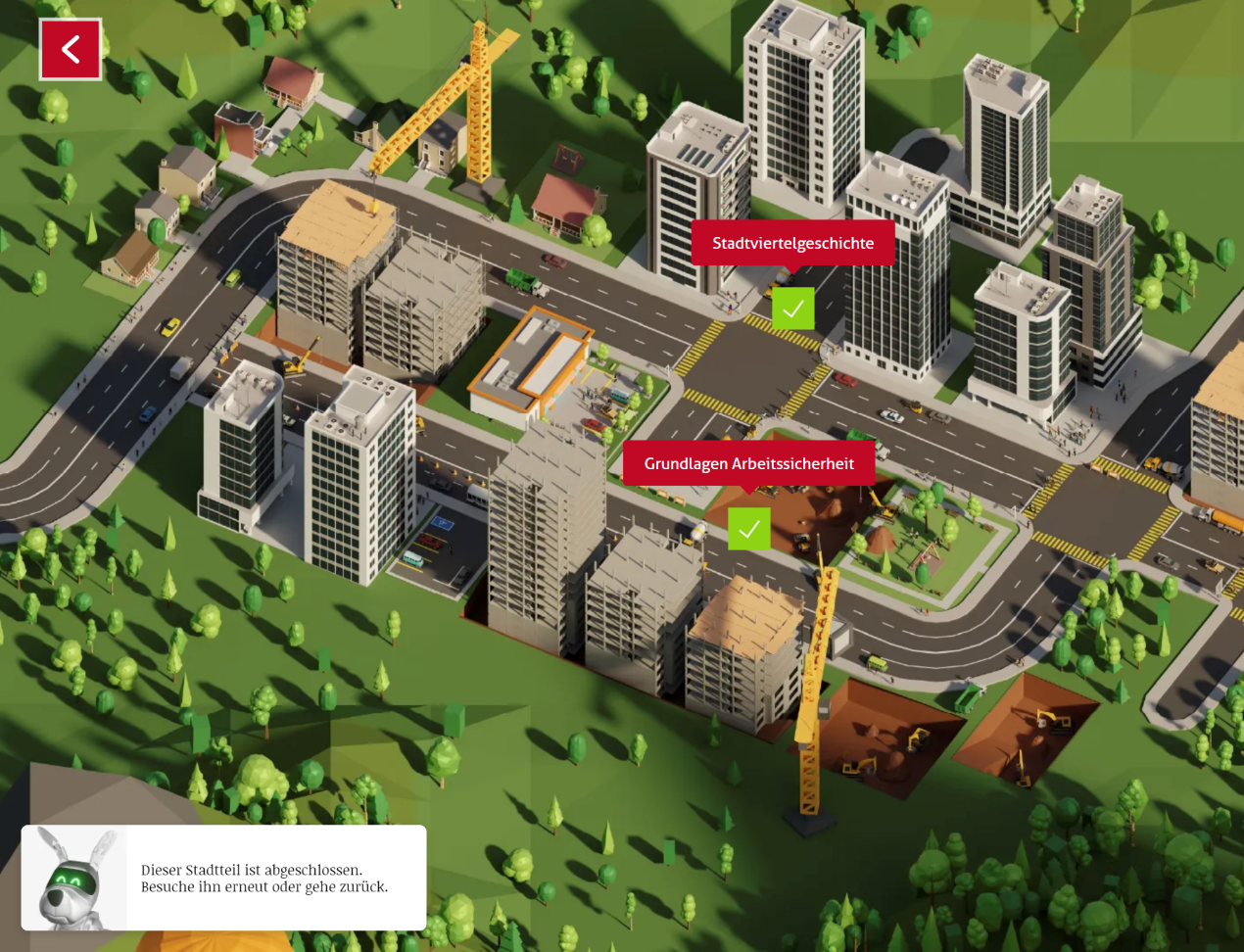
To address this challenge, swissstaffing collaborated with Scheer IMC to develop "staffing city," an innovative gamified digital learning platform tailored for staffing professionals, particularly newcomers to the industry. The platform offers an immersive 2D/3D city interface, episodic storytelling, and dynamic progress tracking, providing learners with an engaging and practical educational experience. Key features include:
- Advanced storytelling and design: The platform employs advanced storytelling techniques with relatable characters, simplifying complex topics and making them accessible and engaging.
- User-centric development: "staffing city" is tailored to meet the specific needs of staffing professionals, integrating state-of-the-art learning management systems for seamless access.
- Gamification: Features like "Levolution" visually illustrate learners' progress by altering the appearance of the virtual city, offering motivation and a tangible record of achievement.
Satisfied users and measurable improvements
Since its launch, "staffing city" has transformed how personnel service providers in Switzerland access and engage with training materials. The platform has attracted 400 active users, with 210 participants successfully earning swissstaffing certificates upon completing the training. It has achieved a satisfaction score of 3.5 out of 4.0, reflecting high user engagement and approval.
Preliminary feedback indicates measurable improvements in compliance, safety awareness, and customer satisfaction. Members report better adherence to safety and legal standards, reduced fines, and improved workplace safety. Additionally, user companies benefit from more skilled personnel, enhancing operational efficiency and client relationships.
Building on the success of "staffing city," plans are underway to explore additional gamification elements, adaptive learning features, and incorporate earlier user feedback to refine the platform. Future developments include creating new episodes covering advanced topics and implementing robust analytics to track long-term outcomes and return on investment for user companies.
There is also a commitment to updating the learning content annually to maintain accuracy and relevance in the rapidly evolving industry.
Scaling Knowledge, Empowering People: Halton's Global Learning Transformation
Uniting global values and scaling local expertise across a complex organisation

Halton Group is a family owned, global technology leader in indoor air solutions with a turnover of about 200 million euros in 2023. Present in more than 35 countries around the world with over 1900 skilled Halton professionals.
Finding an easy and multilingual solution to the learning needs of 35+ countries
With skilled staff in more than 35 countries, Halton were looking for HR technology that could support their goals of implementing global programmes across a wide and diverse ecosystem of business units.
True to their customer-first approach, they needed systems that also respected the local practices, expertise and customer needs of the individual regions.
Halton’s incumbent HR system at that time was extremely complex and was not used regularly enough, resulting in a time-consuming learning curve each time the HR and wider teams needed to use the system. Therefore, Kenny Niutanen, Senior Vice President, People & HR at Halton Group, and the HR team commenced their search for a system better suited to their needs.
Rapidly adopted, time saving and simple to use technology
In the search for new technology to support their HR and L&D (Learning & Development) goals, two things were essential for Halton:
- The ease of generating learning content
- Automatic generation of language versions
Halton eventually found a HR system that worked well for them on the HR side, but it did not contain the ‘L&D’ element which was so important for their learners’ needs. Having looked at various content creation technologies, the HR team was convinced by the ease of imc Express – especially the instant language translation. Kenny explains, “It was the ease of creation and translation capabilities that drew us to imc Express.”
The ability to update the live learning links in imc Express with new information has also been invaluable for the content team at Halton, ensuring that learners always have access to the most current information.

Scaling learning programmes and expertise across 35+ countries
“We needed to have easy platforms, and we need to have HR people that are really good at helping our specialists create content that brings that knowledge to our learners”, Kenny says.
The HR team at Halton were able to work with imc Express very rapidly and rolled out their first global programmes within a few months. Kenny found that the speed of creation had saved at least 50% of his time on these projects, and possibly even more.
In addition to the 4 core HR leads within Halton, imc Express now has close to twenty active users internationally. All local HR’s create their own onboarding and regulatory content and they also need to host this on their own sites in the relevant language(s), so imc Express is also being used successfully by this extended team.
Outside of the onboarding and regulatory content that the HR leads create, there is a huge amount of technical knowledge locally in Halton’s ecosystem. The simplicity of imc Express is allowing technical experts (supported by HR) to convert this knowledge into easily consumable and interactive learning content. The technical experts are further supported by the AI capabilities of imc Express to help them create better learning experiences, with no prior knowledge.
Looking at the future, Kenny says, “We want to make sure that we use our HR platforms to help broaden the knowledge on Halton technology, which is then going to be beneficial for the business. That is really the driver for the future.”
New Learning at Deutsche Bahn
DB Fernverkehr AG: Creating learning content at ICE speed
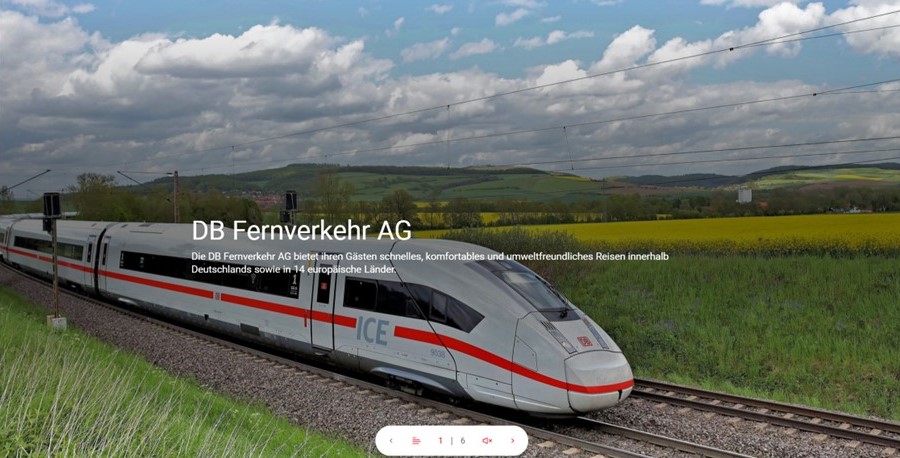
DB Fernverkehr AG is a subsidiary of Deutsche Bahn AG and offers its passengers fast, comfortable and environmentally friendly travel within Germany and to 14 European countries. With over 500 ICE and Intercity trains, it transports more than 400,000 passengers to their destination every day.
With more than 19,000 employees, it operates a dense network of over 800 daily long-distance rail services and connects many regions of Germany. In addition to its national services, it also offers around 250 cross-border connections to over 80 European cities every day.
Ten maintenance workshops and around 170 locations for the provision of trains throughout Germany ensure that DB Fernverkehr AG's fleet is always ready for use.
Extensive content and language barriers
A shortage of skilled workers and employee fluctuation are impacting many companies and often require new training for the workforce. Deutsche Bahn is no exception. A particular challenge is that face-to-face training is expensive and blocks trains that are needed to transport passengers.
Nicole Szabo, on-board service qualification officer and her team therefore wanted to focus more on digital learning formats. But where should they start? The existing training materials comprised 3,000 to 4,000 pages of Word documents and were sometimes written in a complex way. A problem for learners whose native language is not German, which is particularly common in the on-board catering sector.
Ms Szabo was therefore looking for a solution that would enable their training developers to create digital learning content quickly and easily.

eLearning with automated training development
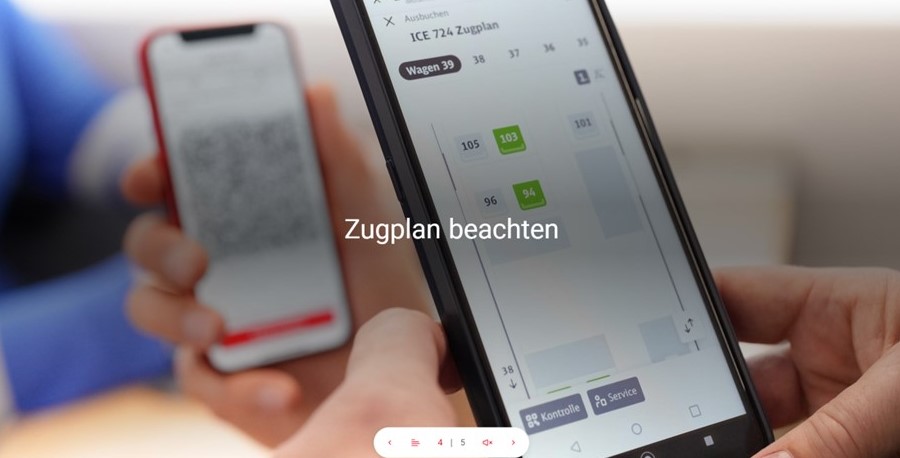
With imc Express, Nicole Szabo and her colleagues were able to upload numerous Word documents and transform them into interactive learning content for employees with minimal effort. The user-friendly interface considerably simplifies the creation and administration of learning content, and the ease of sharing facilitates the feedback process. Automated templates which are CI-compliant also ensure a consistent quality standard.
Employees from all backgrounds now benefit from the automatic translation function and consume the content in their native language, for example in Turkish, Arabic, Ukrainian, French and Spanish. This increases understanding and acceptance.
Nicole Szabo describes another advantage of imc Express for DB Fernverkehr AG: "Our training developers don't create eLearning courses full-time, they are practical trainers. These are the people who know the most about the topics. That's why we needed an easy-to-use tool that already gives them a basis for the structure of the eLearning courses. This means they don't have to start from scratch."
Hundreds of training contents created
With imc Express, Szabo and her team were able to provide a wide range of digital learning content in a short space of time. In doing so, they are positioning Deutsche Bahn as an attractive employer, as younger employees in particular want to use digital media. The finished eLearning courses can be easily integrated into the Group's own learning management system.
In view of the large number of training developers, the team was particularly pleased with the tool's ease of collaboration, which facilitates coordination and checks. In addition, the number of people who can create training courses is unlimited.
The content is available on-demand via employees' tablets or smartphones when it is needed. They also create a shared knowledge base that can be built-on in classroom training sessions.
Szabo summarizes: "Our training developers enjoy using imc Express very much and frequently. One of them has even created over a hundred smaller training units. We can also provide specific content for smaller target groups where it would not be worth investing in our own eLearning."
AI-supported communication training
Effective conversation training thanks to AI
Festo was founded in 1925 in Esslingen am Neckar and provides pneumatic and electrical automation technology and technical education solutions to around 300,000 customers. As a driving force in automation, this family-owned company has also become the world’s leading provider of technical education and training.
Festo employs around 20,500 people worldwide, with companies in around 60 countries and over 250 locations. More than seven per cent of its revenue is invested in research and development every year.
Scaling communication training effectively
In large companies like Festo, it's structurally challenging to offer practical learning methods to improve communication skills for leaders and employees across the organisation. Traditionally, such methods are often delivered through seminars involving role-playing. However, these methods reach their limits when scaling up or focusing on highly individual topics and practice scenarios, such as when leaders need to prepare for specific conversations like difficult employee discussions. Moreover, the success of these methods often depends on the empathy and acting skills of the sparring partner.
"We wanted a way or tool for leaders to simulate challenging conversations anytime and anywhere," says Corinna Jaron-Theiler, Organisational Development Specialist at Festo. "Ideally, the person should also receive feedback on their behaviour."
In addition to scalability, internationalisation was an important factor. It was almost impossible to offer standardised, practice-oriented training for leaders worldwide.
For Manuel Schmidt, Learning Innovation at Festo, it was particularly important to provide a safe space for communication training. "Comparable to a dojo in karate or sparring in boxing, allowing you to practise and improve," he explains.
A safe space to improve communication skills
Festo saw the growing potential of artificial intelligence as an opportunity to meet this challenge. Manuel Schmidt simulated different personas and scenarios using a custom GPT solution. The first results, while promising as a proof of concept, didn't quite meet Festo's needs for a more professional and intuitive solution for learners.
Building on over 20 years of collaboration, the company turned to imc to co-develop a tool. Festo's internal AI expertise is high, but its developers were heavily occupied. As a result, the People Development and Learning team sought a partner with comprehensive learning expertise.
Alongside the Organisational Development and People Development & Learning departments, IT, data protection, and the works council got involved from the beginning to ensure data security.
"We quickly and agilely sat down together, sketched out our idea, and shared the prompt we'd previously used," recalls Manuel Schmidt. "By the next meeting, imc had already created a click dummy for us to test internally."
Testing AI in practice
As part of an AI-focused month covering various topics, Festo presented and tried out a test version in a workshop with around 25 participants. "The feedback was so positive that we knew it was worth continuing with the project," says Corinna Jaron-Theiler.
The collaboration resulted in DialogueGPT, an AI-based tool for simulating conversations that allows leaders to train for different scenarios they might encounter: performance reviews, critical feedback discussions, salary negotiations, and development talks, for example. Users can select pre-defined characters or create new personas based on personality traits. After the conversation, which currently takes place via chat, users receive feedback.
"One of the challenges in training conversations with AI is finding the right balance," explains Corinna Jaron-Theiler. "We need authentic responses from the characters that don’t give in too easily in tough situations but also don’t just stonewall. It needs to be possible to find a constructive solution. And we’ve done that well."

Rethinking learning – scalable and international
The feedback from the first test was very positive. The workshop group of leaders particularly liked the easy-to-use interface that didn’t require them to create their own prompts, as well as the ability to customise characters and scenarios.
The first step is to give the pilot group of leaders access to DialogueGPT, with a roll-out to all employees already in the works. It's also important for them to improve their communication skills. Besides the current conversation scenarios, Schmidt and Jaron-Theiler see a lot of potential in other training areas, such as sales training and service hotline training.
The planned voice input and output feature will play an important role. "That will create a whole new level of immersion and be a game-changer for the learning experience," emphasises Manuel Schmidt.
Corinna Jaron-Theiler is particularly excited about the internationalisation possibilities: "With the simple language switch, we can offer the tool to leaders worldwide."
AI teaches long-term communication skills
By using DialogueGPT, Festo hopes to improve communication skills across the entire company in the long term. There are also interesting perspectives for learning culture overall, as Manuel Schmidt explains: "It enables us to rethink learning. We could replace traditional assessments like multiple-choice questions with dynamic formats. At the end of a social skills learning path, for example, employees could be required to pass a communication scenario with a certain score. It’s much more active than just clicking through a test."
Corinna Jaron-Theiler emphasises that DialogueGPT makes AI more accessible and easier to use for users. Even without prior knowledge, they can dive in and try it out. This not only improves communication skills but also increases AI competency.
Manuel Schmidt is full of praise for the collaboration with imc: "I loved how open imc was to our idea and how simple and straightforward the cooperation was. There should be more partnerships like this: imc was able to develop a solution for a concrete customer need that other companies will also benefit from later. And we were directly involved in the innovative development and could use it as early as possible."
On the other hand, the practical feedback was also very helpful for imc during the process. Julian Kappich, Head of Content Products and Innovation at imc, explains: "Through close collaboration, we were able to ensure the tool fully met Festo’s requirements. Organisationally, whether it's IT security, feedback from the works council, or integration into the existing L&D landscape, as well as content-wise and functionally." imc also received early feedback from users about which functions and scenarios were particularly helpful, what was used less, and whether the usability worked.
For both sides, the project was a complete success. "This solution really allows us to offer high-quality conversation simulations to everyone in the company," summarises Manuel Schmidt.