The Skills Shift Is Here. Are You Ready?
Turning skills disruption into sustainable advantage
We live in a time when BMW workers are using AI to learn how to teach their robot coworkers to do their job. If that doesn't prove that there are changes in manufacturing, nothing will!
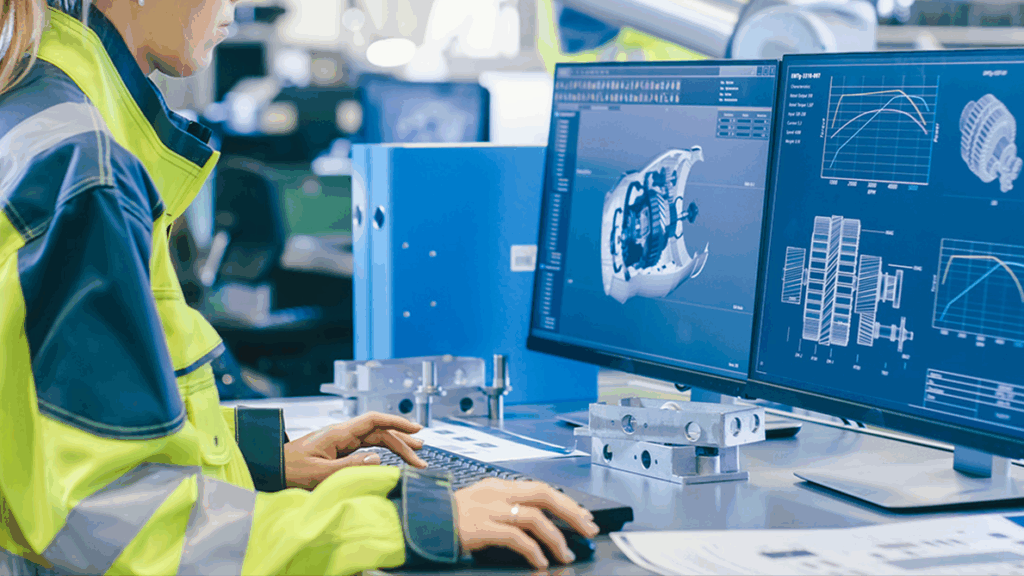
Manufacturers are facing rapid change. New technologies such as automation and AI are reshaping workforce demands. To stay competitive, organisations need teams that can adapt quickly and confidently to modern production environments.
40% of core skills in manufacturing will change by 2030
The World Economic Forum’s “Future of Jobs 2025” report projected that by 2030, nearly 40% of the core skills of the advanced manufacturing and supply chain workforce will change. Your organisation’s transformation will rely on future-ready, adaptable teams with the technical, digital, and soft skills needed to adapt to rapid technological change and increasing operational complexity.
Your current and future co-workers, teams, departments, and business units may be ready for these changes, but is your organisation equipped to drive and support this transformation?
Driving technological change... by investing in people first
McKinsey’s The State of Organizations 2026 report highlights the tectonic forces currently reshaping organisations worldwide. Unsurprisingly, one of the most significant shifts concerns how work is performed and how roles will continue to evolve. As the report notes, evolving employee expectations, shifting demographics, and new technology‑driven working models are fundamentally transforming the workforce.
Against this backdrop, organisational and technological change, and therefore future economic growth, cannot be achieved without strong support for people development and adaptability. The same McKinsey research shows that even organisations leading technological change recognise a critical gap: 86 percent of leaders feel that their organisations are not yet prepared to adopt AI in day‑to‑day operations.
Senior executives increasingly understand that the payoff of a sustainable transformation is critical and now is the time to invest in these changes alongside technological investment. As one executive quoted in the report observed, “For every $1 spent on technology, $5 should be spent on people.”

People, processes, and technology must operate in true symbiosis. This is what will enable organisations to remain future‑proof in a world evolving faster than many can adapt. In manufacturing in particular, increasing automation, shifting supply chains, and the rise of smart factories are fundamentally reshaping how value is created. At the same time, the shift towards a skills-based economy is redefining competitiveness, placing capabilities, rather than roles, at the centre of organisational success.
This is where learning and development, as a critical business function, comes into its own. It is ultimately people, empowered by the relevant skill sets, who will enable organisations to successfully navigate what lies ahead – and at the speed that the market requires.
Don’t neglect your learning technology ecosystem
Just as legacy processes and technology are being re-designed for the future, such as in BMW’s ‘Physical AI’ project, your existing learning technologies and learning culture (learning ecosystem) will almost certainly need to be reviewed and rewired to meet the shifting landscape.
Is your learning ecosystem, team, and technology equipped for transformation?
Legacy learning and development systems were developed to support a slower pace of change in manufacturing, heavily focused on compliance and safety and delivered via ‘static’ experiences, reflective of the ways ‘things have always been done’ and with little consideration to the real development of skills and competencies.
With the pace of change in manufacturing, future-ready workforces are having to learn and adapt faster than ever before. Traditional learning methods are being replaced by modern frontline learning, on-demand, and in formats that are faster and more accurate. Take Boeing for example, who replaced ‘stacks of 2D binders’ with cutting edge learning technology and achieved a boost in quality and accuracy from their technicians.
Learning strategies and technologies based around compliance, onboarding, and historical knowledge of products or processes and managed in a ‘tick-box’ style will no longer meet the demands of an innovative, ever-shifting environment or equip the workforce to be prepared for it.
This mandatory training will of course still be required and tracked, but will need to be combined with modern, on-demand training of new products and technologies to keep pace with the speed of change.
The transformation of your organisation requires the transformation of your workforce and your learning ecosystem and technology also needs to be ready and have the corresponding level of investment applied to it.
Looking to transform your learning ecosystem and want to know where to start? Our related article and whitepaper provide more information on the topic:

Whitepaper: LMS Choice Model
Explore the range of learning management systems available and how to choose the right one for your organisation.
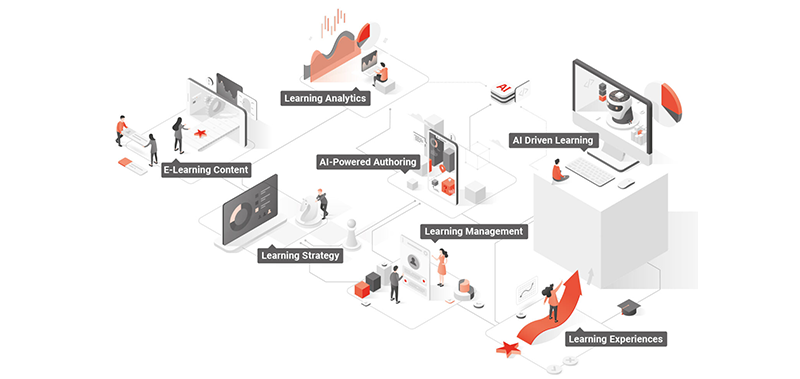
Learning Ecosystem: Integrated Enterprise Learning
Learn what defines a learning ecosystem and how a connected set of learning technologies creates real value for organisations.