From Change Fatigue to Change Energy
How to put your organisation on the path to human-centred change management

From overwhelmed to empowered: Rethinking change management
Most people don’t resist change itself; they resist the way it’s managed. Many organisations start transformation programs with good intentions but lose momentum along the way. Communication slows down, uncertainty creeps in, and employees start to feel drained instead of motivated.
Forrester’s Change Management Model (2024) points out that this “change fatigue” is not inevitable. It happens when organisations focus too much on process and not enough on people. Successful change requires clarity, empathy, and a sense of emotional safety as much as it does a well-structured plan.
Change is no longer a project
Change today isn’t something that happens once and ends. It’s an ongoing part of how organisations work. New tools, new skills, and new priorities arrive in constant waves. This means leaders can’t just roll out an initiative, hold a few training sessions, and move on. They need to help people build the mindset and confidence to adapt again and again.
A practical framework for leading people through change
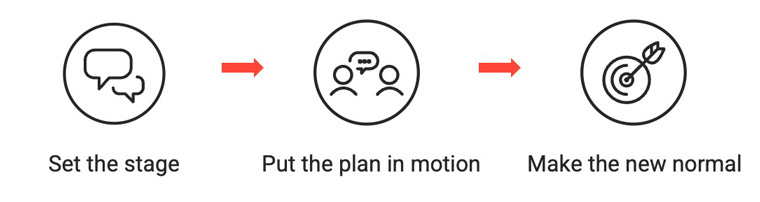
Forrester suggests three phases that help organisations manage both the operational and human sides of transformation.
1. Set the stage – Be open about what’s changing and why. Invite people into the conversation early, even if not all the answers are clear yet. When employees understand the reason behind a shift, uncertainty becomes easier to handle.
2. Put the plan in motion – Once change begins, keep communicating. Check in often, listen to feedback, and make small adjustments along the way. Progress comes from involvement, not from rigid planning.
3. Make the new normal – When new systems or behaviours are in place, take time to recognise what has been achieved. Celebrating success helps people to feel a sense of ownership and makes the change last.
Each phase relies on trust. People need to feel safe to ask questions, try new things, and admit when something isn’t working. That sense of safety is what turns resistance into engagement.
Keeping change energy alive through learning
Learning and development have a central role to play. Training shouldn’t only happen when something new is introduced. It should continue in smaller, ongoing ways that keep people confident and curious. When learning is part of daily work, employees see change as a normal part of growth rather than a disruption.
Encouraging peer learning, mentoring, and open discussions about what’s working helps strengthen this “change muscle”. Over time, that shared confidence becomes what Forrester calls “change energy” — the ability of a workforce to stay positive and focused even when things keep shifting.
Leading with empathy and clarity
At its core, human-centred change management is about how leaders communicate and support their teams. When leaders are honest, listen to concerns, and make room for learning, they build the trust that makes every future change easier.
Change fatigue rarely comes from too much change. It comes from people feeling left out of the process. Energy returns when they feel informed, involved, and valued.
View the "Forrester Change Management Model" 2024 in full here.