Closing the Skills Gap: A Practical Checklist for L&D Leaders
How to turn skills into measurable business success

Most organisations do not need further convincing that skills matter, they simply need a more practical way to act.
Our State of Learning Technologies 2026 report found that 86% of organisations already see systematic skills management as a strategic priority. But many still struggle with the basics: mapping current skills, matching people to relevant development opportunities, adapting to changing requirements and measuring business impact. That should change how skills programmes are designed.
The goal is ultimately not to create the most comprehensive skills architecture in the market, but to make better and faster workforce decisions. BCG’s advice is useful here: start where skills are clearly defined, where business leaders are engaged, and where early impact can be measured. Below is a practical checklist to use.
From skills strategy to action
Choose one priority problem that better skills visibility could improve. For example: redeploying people into growth roles, improving AI readiness in a critical function or reducing time to productivity for new hires. Skills efforts without a business anchor tend to drift into theory.
Start where skills are easier to define and early wins are realistic. That matters because credibility often earns the right to scale. If you cannot describe the skill, the gap, and the desired outcome clearly, the pilot is probably too broad.
One of the biggest traps in skills programmes is over-engineering. You do not need a perfect enterprise ontology before you can act. You need enough shared language to identify a gap, connect it to learning or mobility action, and track whether that action helped.
A skills gap is rarely solved by training content alone. Development needs context and practical application. Connect learning to stretch assignments, manager coaching, internal gigs, role-based pathways, and real workflow use.
Our data shows that AI literacy and automation readiness are now the top skills priorities. That is a signal to move beyond generic AI awareness and towards role-specific enablement. People need to know how AI changes their work, not just what the technology can do.
If the goal is internal mobility, track movement into target roles. If the goal is AI readiness, measure adoption in real workflows. If the goal is performance, define the operational KPI up front. Measurement is still rare, and that makes it a differentiator.
One of BCG’s clearest warnings is that skills initiatives fail when they remain HR-led in isolation. Cross-functional ownership matters because skills only become valuable when they influence hiring, workforce planning, performance, and day-to-day work.
Once a pilot shows results, expand carefully. Do not scale the framework just because it exists. Scale the parts that actually improved decision-making, capability, or performance. That might be the use case, the measurement model, the manager role, or the way learning was connected to opportunity. The goal is not a bigger skills architecture. It is repeatable impact.
Final thought
If there is one takeaway, it is this: Do not ask whether your organisation has a skills strategy. Ask whether that strategy changes anything important.
If it helps you identify the right gaps faster, target development better, redeploy talent more effectively, and make capability visible in business terms, it is working. If not, the next step is probably not more framework. It is better focus.

Skills Are Mainstream. The Real Gap Is Skills Intelligence.
Most organisations have a skills strategy but few can prove its impact. See why skills intelligence is the real gap and how it can lead to measurable business value.
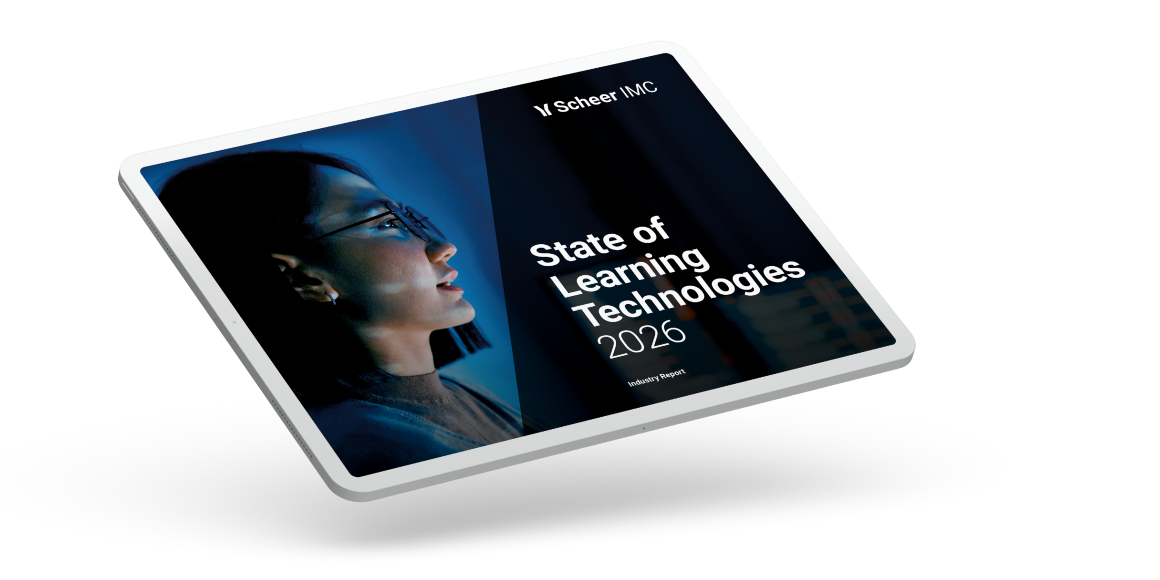
State of Learning Technologies 2026 report
Read how over 400 enterprise L&D leaders around the world are navigating learning technology priorities, AI adoption, and skills development in 2026.